
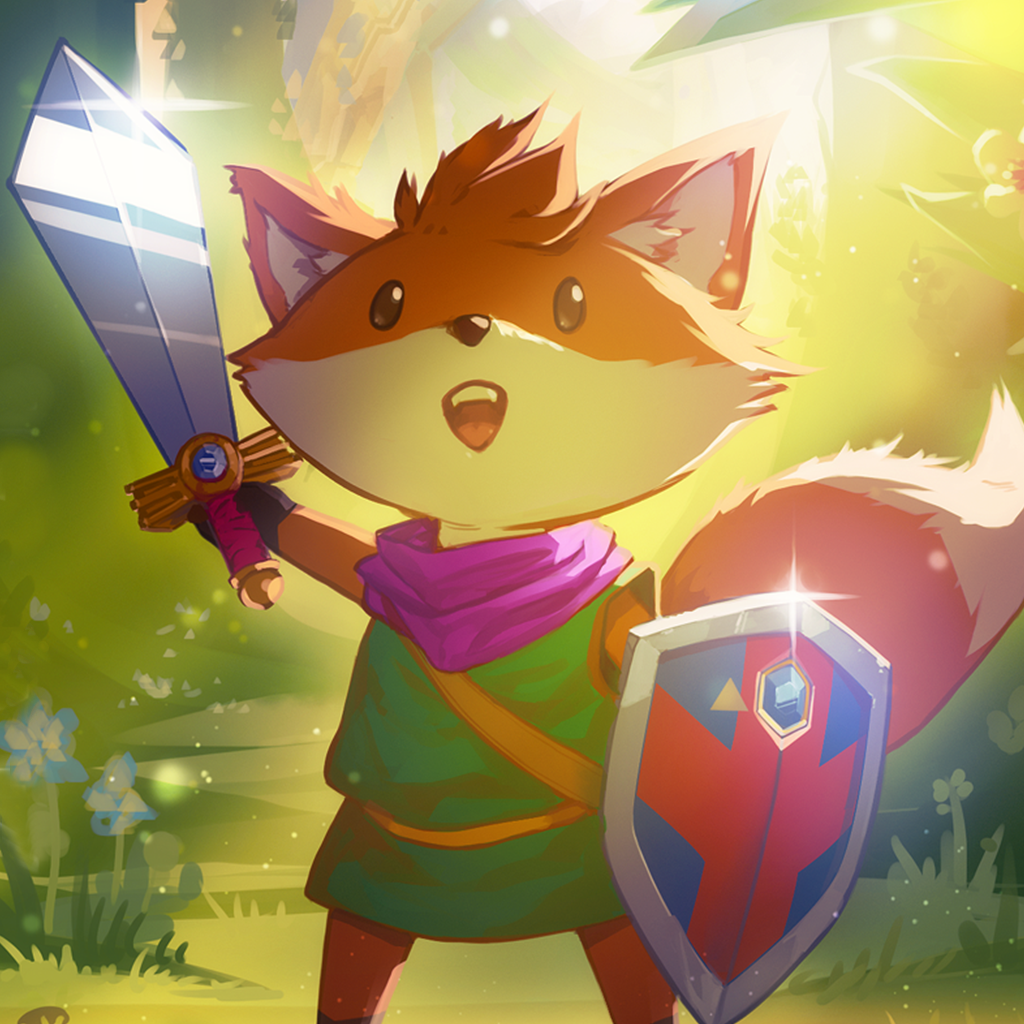
Yes, it’s another TUNIC post. I’ve been thinking about it a lot lately because I have it queued up for a replay, and I got thinking about my first time…
TUNIC is one of those games that whispers secrets at you. It doesn’t hold your hand, it doesn’t dump lore in your lap—it makes you work for it. And honestly? That’s what makes it so damn good. On the surface, it’s a charming little adventure with a cute fox and some Zelda vibes. But dig deeper, and you’ll find cryptic languages, eldritch forces, and a time loop that makes Majora’s Mask look like child’s play.
I played TUNIC for the first time two years ago on the Nintendo Switch. At first I wasn’t sure what to expect, because (at that time) I didn’t usually go for those isometric platformers, but the cover looked cute and… it’s a little fox! But man, that game got under my skin really quickly. I think that’s the beauty of really well-crafted, well-written games: they might not be your normal go-to, but if you give them a chance, you can find some serious gems.
So, grab your adventurer’s hat (or, in this case, tiny tunic), and let’s unravel the enigma that is TUNIC.
Ancient Foxes, Forbidden Magic, and the Classic ‘We Messed Up’ Trope
Before our little fox friend even washes up on shore, this world had already gone to hell. Don’t get me wrong, it’s a beautiful game with a gorgeous setting. But you can tell that something is off. There was once a great civilisation of ancient foxes, who—like so many before them—decided that playing with the fabric of reality was a solid plan. They discovered the Holy Cross, a powerful relic that allowed them to defy death, mess with time, and generally act like gods.
Shockingly, it all went terribly wrong.
In their quest for immortality, they triggered some kind of reality collapse. Their once-glorious empire fell into ruin, and now the only remnants are cryptic obelisks, lingering spirits, and the occasional horrifying boss fight. The whole thing screams we flew too close to the sun, but with more fur.
The Heir: Tragic Figure or World’s Saddest Gatekeeper?
At the centre of all this madness is The Heir.
This spectral fox is trapped in a crystal prison in the Far Shore, locked in a cycle that has repeated who knows how many times. But here’s the kicker—The Heir was once a hero, just like you. At some point, they took up the mantle, tried to fix everything, and ended up stuck in the very loop they were fighting against. Now they’re both protector and prisoner, forever doomed to fight against the next tiny fox that stumbles into this mess.
It’s all very poetic. And by ‘poetic,’ I mean crushingly tragic.
The Purple Miasma: Never Trust Glowing Evil Mist
A key part of the ancient foxes’ downfall was their discovery of a strange purple energy. They harnessed it for power, thinking nothing bad will happen if we extract this unknown cosmic force, right?—which is, of course, the equivalent of touching a big red button labelled ‘Do Not Press.’
The result? Corruption, decay, and a time loop that refuses to let the world move on. This purple essence still lingers, warping reality, twisting creatures into monstrosities, and generally making life a nightmare for our tiny protagonist.
Lesson of the day: If something is glowing and pulsing ominously, do not mess with it.
The In-Game Manual: A Love Letter to Retro Gaming (That’s Trying to Kill You)
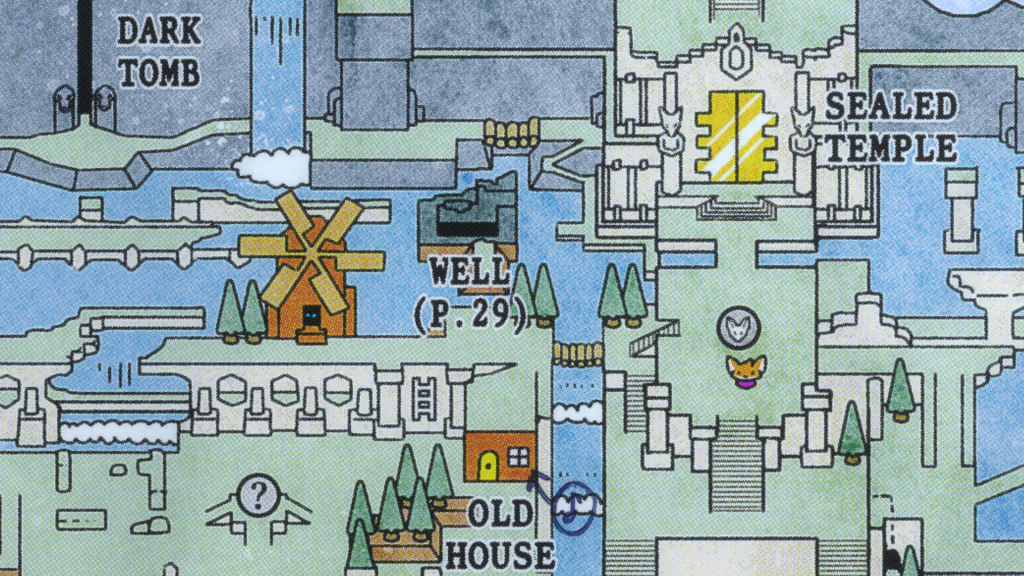
One of TUNIC’s most brilliant features is its in-game manual. Instead of giving you a boring tutorial, the game scatters manual pages throughout the world, forcing you to collect and interpret them. They’re gorgeously illustrated, full of hints (and lies), and—just to make things extra challenging—written mostly in a completely made-up language.
That’s right. You’re literally decoding a fictional script while also trying to survive an apocalypse. It’s like someone gave you a Zelda instruction manual, but all the pages are in ancient Sumerian, and half the information is red herrings.
And yet, when you finally translate a section and realise it holds the answer to something you’ve been stuck on for hours? Chef’s kiss.
Fan Theories: Because Nothing is Ever Just as It Seems
Of course, a game this cryptic means the fans have gone feral with theories. Some of the best include:
- Simulation Theory – The entire game world is a simulation, and the ancient foxes figured out how to mess with their own game’s save data, which led to the obelisks and the looping cycle. Basically, they broke their own reality trying to cheat the system.
- The Fox Trinity – The Heir, the Hero (you), and the ancient civilisation’s last hope are actually the same entity, just at different points in the cycle. Every hero who fails to break the loop eventually becomes The Heir, doomed to fight their successor until someone finally gets it right.
- You Were Never the First – The game hints that countless fox heroes have come before you, all trying (and failing) to undo the curse. Meaning every time you die and respawn, you’re just one more fox in a long, tragic line of failures. No pressure.
Breaking the Cycle: The ‘Happy’ Ending (Sort of)
If you’re clever (or just stubborn enough to collect every manual page), TUNIC offers a true ending. Instead of fighting The Heir, you show them the full manual, revealing the entire history of the world. This breaks the cycle, freeing both of you from the endless struggle.
This is where the game became one of my all-time favourites. I’ll admit to a rather big lump in my throat. Ahem… OK, it was more than a lump in the throat. I watched the true ending credits through a mist of happiness and an achy heart (in a good way).
What happens next? The game lets you decide. Maybe you both finally get to explore the world together. Maybe the cycle just resets again in some other way. Either way, it’s a powerful moment—one that rewards curiosity, perseverance, and a borderline obsessive love for hidden details.
If you struggle with any of the pages or puzzles, there are plenty of useful guides on YouTube.
The Bigger Picture: Why TUNIC is a Masterpiece
At its core, TUNIC is a game about discovery. It doesn’t just throw lore at you—it makes you earn every scrap of knowledge. It’s a love letter to classic adventure games, packed with secrets, mysteries, and a deep well of meaning that only reveals itself if you’re willing to look.
And honestly? That’s what makes it special.
So, whether you’re translating Trunic, theorising about the timeline, or just enjoying the satisfaction of dodging a brutal boss attack at the last second—TUNIC offers an experience unlike anything else.
Now, if you’ll excuse me, I need to go stare at a cryptic symbol for another four hours. I swear I’m close to figuring this one out.
Still Hungry for Secrets?
If you’re as obsessed with TUNIC as I am, here are a few deep dives to keep you going:
- A full breakdown of all 12 hidden treasures in TUNIC
- Fan theory explaining the time loop in excruciating detail
- A full translation of the Trunic language (if you fancy losing your mind for a few hours)
Got any TUNIC theories of your own? Drop them in the comments—I promise to read them while furiously scribbling notes and muttering “it all makes sense now.”
 Jenesque Gaming
Leave a comment