
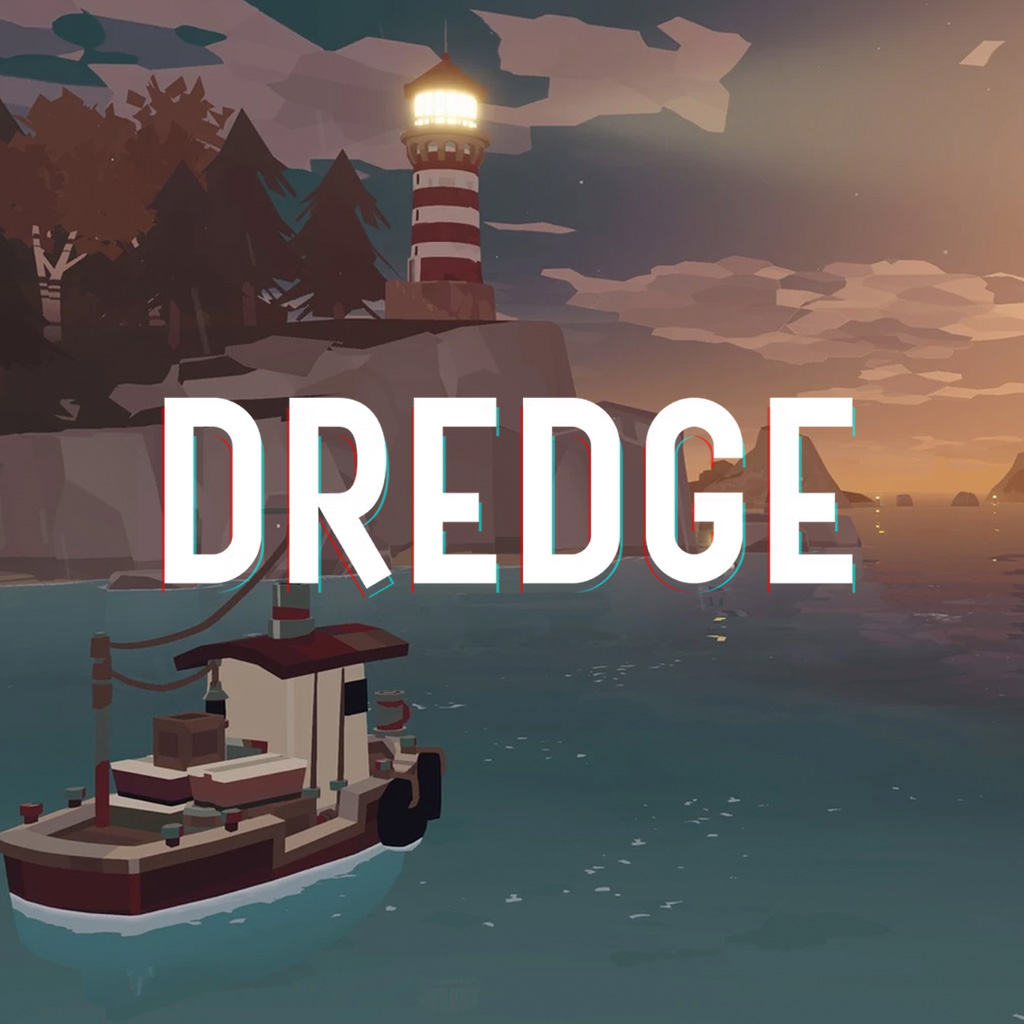
Fishing games tend to be one of two things: 1) painfully mundane, where the most thrilling thing is upgrading your rod, or 2) utterly deranged, featuring colossal sea beasts that want to consume your soul. Dredge comfortably straddles both, managing to be an oddly relaxing fishing sim while also reminding you that, yes, the ocean is a horrifying abyss full of things with far too many eyes.
I played Dredge last year, lured in (pun absolutely intended) by its eerie aesthetic and promise of Lovecraftian horror. And while I certainly got my fill of things that should not exist, what I didn’t expect was to genuinely enjoy the fishing. Dredge is a fantastic example of horror creeping in around the edges of something deceptively ordinary—one minute you’re happily catching mackerel, the next you’re staring at a grotesque, mutated abomination that should not be.
Hook, Line, and Sinister
At its core, Dredge is a fishing game. You sail a little boat around an archipelago, catching fish, upgrading your vessel, and taking on various odd jobs for the locals. But, as you quickly realise, something is terribly wrong with this place. The townspeople are cagey, strange artefacts keep surfacing, and then there’s the not-insignificant issue of what happens when the sun goes down.
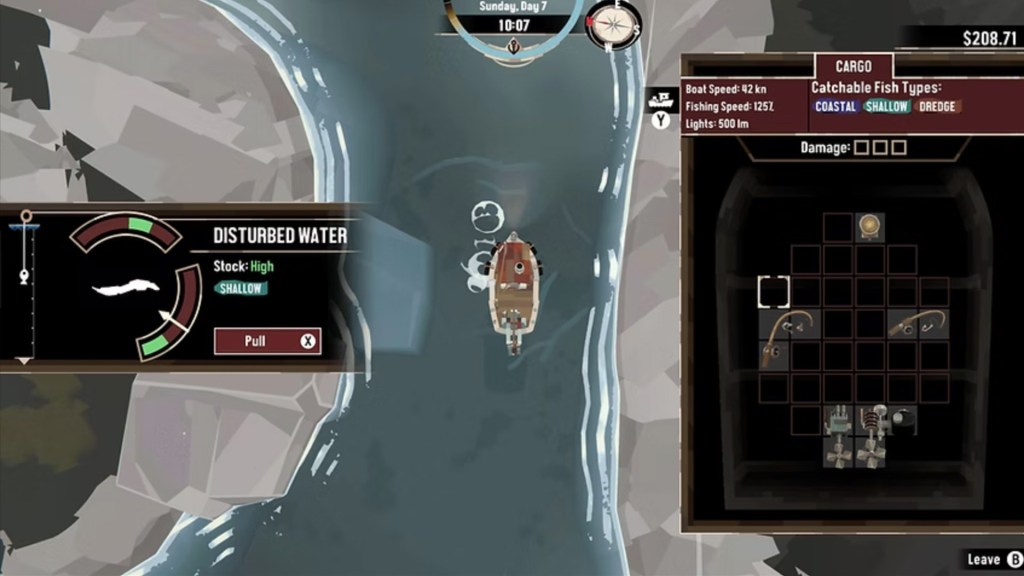
The fishing mechanics are simple yet satisfying. You cast your line and complete a little timing-based minigame to reel in your catch. It’s all quite relaxing during the day, with different types of fish available depending on your location and fishing equipment. There’s also a light inventory management system where you Tetris your fish into your boat’s limited cargo space, which I found weirdly compelling—nothing like trying to wedge an eldritch horror of a fish next to a perfectly normal haddock.
But then there’s the night fishing. Which you should absolutely not do.
See, Dredge has a panic system. The longer you spend at sea after dark, the more your character starts losing it. At first, it’s subtle—your vision warps slightly, shadows flicker at the edges of your screen. Then you start seeing things. Rocks that weren’t there before. Lights in the distance that seem… wrong. And that’s before you meet the actual horrors lurking beneath the waves.
A Boatload of Trouble
As you explore, you’ll uncover the game’s eerie story, which revolves around strange relics, long-forgotten tragedies, and the overwhelming sense that you are a very small thing in a very uncaring world. There’s a handful of (deeply unsettling) NPCs who offer vague warnings and cryptic quests, but the real storytelling happens through the world itself. It’s not a game that hands you the plot on a plate; instead, you piece together its mysteries through exploration, environmental clues, and the increasingly alarming fish you pull from the water.
Upgrading your boat is essential for survival. Better engines mean you can move faster (useful when something is chasing you), stronger hulls give you a fighting chance if you collide with something that wasn’t there a second ago, and improved fishing rods allow you to pull up even weirder monstrosities from the depths. There’s a risk-versus-reward element to everything—you can stay out late to find rarer fish, but is it worth the hallucinations? The creeping dread? The things that slither just below the surface?
Final Thoughts: A Must-Play for the Mildly Unhinged
I went into Dredge expecting a solid indie horror game with a nautical twist. What I got was a surprisingly deep (hah) experience that blends survival mechanics, compelling exploration, and a slow, creeping existential dread that sticks with you long after you’ve docked your boat for the last time.
It’s a rare game that makes fishing feel both relaxing and completely unnerving. If you’re into cosmic horror, enjoy a bit of inventory Tetris, and don’t mind occasionally screaming when the sea starts whispering at you, Dredge is absolutely worth your time. Just… maybe don’t go out at night.
 Jenesque Gaming
Leave a comment