
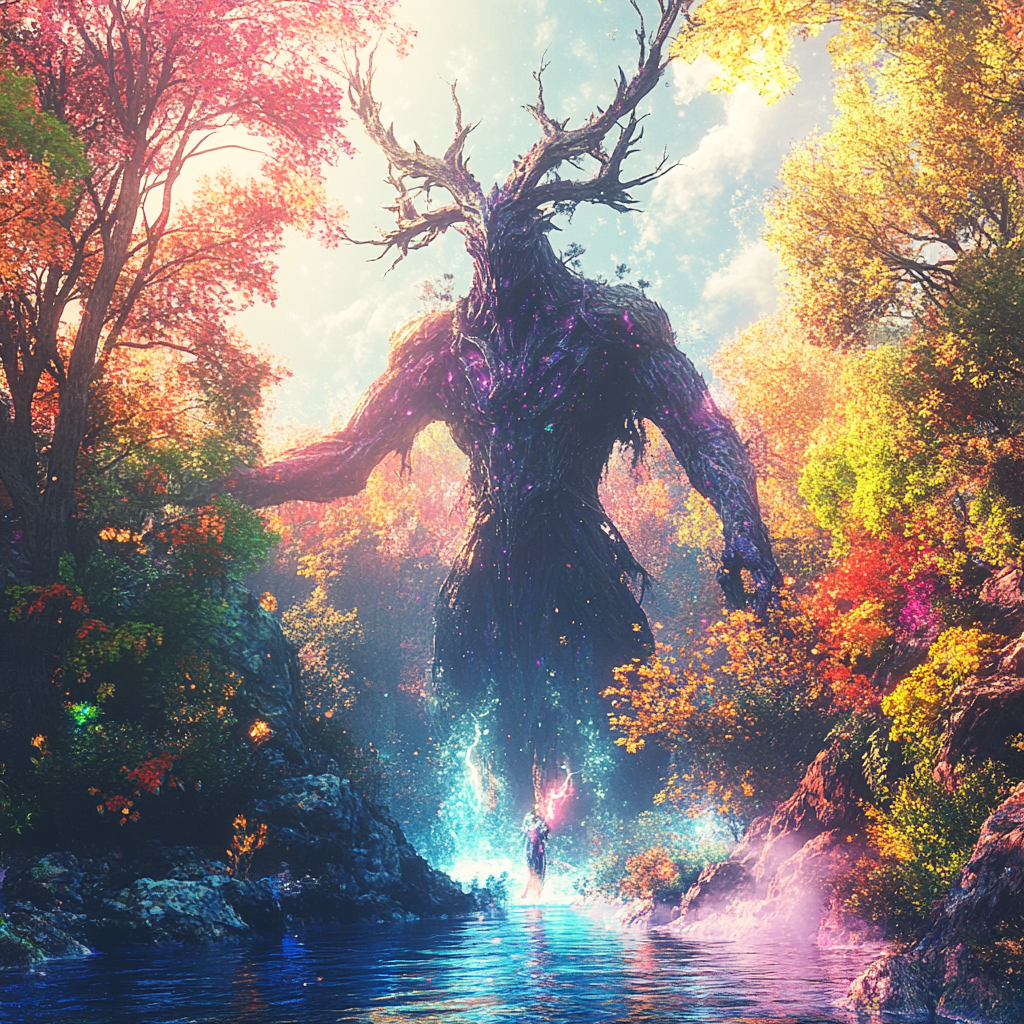
Hircine, the Daedric Prince who makes every full moon a bit more… interesting. If you’ve ever found yourself sprouting fur and howling at the sky in The Elder Scrolls, you probably have him to thank.
Let’s take a look at the wild world of Hircine, the original master of the hunt and the father of all things lycanthropic.
Who is Hircine?
Hircine isn’t your average Daedric Prince. He’s not out here scheming to end the world or steal your soul through a dodgy contract. No, he’s far more interested in the hunt: the thrill of it, the chase, that split-second before predator meets prey. While some Princes revel in chaos for chaos’s sake, Hircine plays by his own kind of code. It’s primal, sure, but there’s honour in it too—if you can call being chased through a blood-soaked forest by a Daedric demi-god “honourable.”
He’s basically Tamriel’s ultimate game warden, except his idea of wildlife management involves turning you into a werewolf and seeing how long you last. There’s something beautifully brutal about that. Nature at its most honest. No politics, no schemes — just survival. And somehow, it makes him one of the more reasonable Princes out there. Which says a lot about the competition.
Lycanthropy: Hircine’s Gift (or Curse?)
Ever wondered where werewolves come from? Look no further than Hircine. He’s the original source of lycanthropy, gifting (or inflicting, depending on your perspective on life) mortals with the ability to transform into beasts. But he’s not limited to wolves; tales speak of werebears, werelions, and even werecrocodiles (because, why not?).
Basically, if it has sharp teeth and a bad attitude, Hircine probably had a hand in its creation.
The Many Faces of Hircine
Hircine’s not exactly a one-form-fits-all kind of god. The Reachmen, in particular, see him as a bit of a shape-shifting overachiever, worshipping him through five different aspects, each one reflecting a piece of the hunt.
- Alrabeg the Hunter is the classic version—the one you picture when you think of a towering figure with antlers and attitude, relentless in pursuit.
- Storihbeg the Man-Beast digs into the messy part of lycanthropy: that tug-of-war between civilisation and savagery. It’s less “howl at the moon” and more “what if the moon howled back?”
- Uricanbeg the Stag flips the script. He’s the hunted, the noble prey. Because what’s a hunt without a worthy challenge?
- Gulibeg the Fox keeps things interesting. Clever, sly, and probably the one who’d steal your gear mid-dungeon just to see what you’d do about it.
- And then there’s Hrokkibeg the Bear, who represents the part of nature that doesn’t negotiate. All brawn, no brakes, pure ferocity.
Together, they paint a picture of a Prince who isn’t just about blood and claws, but balance. The endless cycle of hunter and hunted, strategy and instinct. It’s one of the reasons Hircine feels so alive in the lore: he’s never just one thing.
The Wild Hunt: Not Just a Fairy Tale
The phrase “Wild Hunt” might ring a few mythological bells. Spectral riders, stormy skies, that sort of thing. But in Tamriel? It’s Hircine’s personal party trick. His grand event. The one you really don’t want an invite to.
This isn’t some cosy countryside hunt with venison stew at the end. When Hircine calls the Hunt, the whole world seems to hold its breath. The forest shifts. Shadows move. And somewhere out there, something starts running (maybe you).
Hircine himself leads the chase, surrounded by his werecreatures and daedric beasts, all of them out for one thing: the sheer joy of pursuit. For him, it’s not all about cruelty as you might expect. It’s about perfection. The rhythm of the chase, the balance of predator and prey, and that pulse-pounding moment before the catch.
For everyone else? It’s a nightmare wrapped in moonlight.
A Daedric Prince with a (Sort of) Code of Honor
Unlike some of his more unhinged Daedric siblings, Hircine actually plays by a code. It isn’t kindness, so don’t get too comfortable, but it is a kind of order. The Hunt, to him, is sacred. It’s ritual, not chaos. Every chase is a test of skill, every kill an act of balance between predator and prey.
He respects both the hunter and the hunted, although that’s probably cold comfort if you’re the one currently being tracked through the woods. Hircine doesn’t revel in mindless slaughter. He lives for the challenge, the rhythm of pursuit, and the raw honesty of nature doing exactly what nature does.
That’s what makes him so fascinating, and maybe even “honourable” if you squint hard enough. Still, being honoured by Hircine rarely ends well. Teeth are usually involved.
The Glenmoril Witches: Hircine’s Devoted Acolytes
Ever wondered who keeps Hircine’s whole werewolf operation running? Meet the Glenmoril Witches, a coven so loyal to him they probably have fur-lined cauldrons. They’re the ones responsible for spreading his “gift” of lycanthropy—and, occasionally, taking it away.
These witches serve as the link between mortals and the Lord of the Hunt himself. Their rituals are murky, steeped in blood and secrecy, and no two encounters with them ever feel the same. Some seek them out hoping to gain the strength of the beast. Others come begging for a cure, praying they’ll survive the price.
Either way, dealing with the Glenmoril Witches is never simple. Power rarely is in Hircine’s world.
Cultural Perspectives: One Prince, Many Views
Hircine’s reputation varies across Tamriel:
- Imperials: Generally, Daedra aren’t invited to Imperial dinner parties. Hircine is viewed with suspicion, though some sects acknowledge him as “Half the Conscience of Man,” a nod to the primal instincts he represents.
- Khajiit: To the feline folk, Hircine is the “Hungry Cat” or “Beast Prince.” Every Khajiiti hunter respects him, seeing him as the spirit of pursuit and purposeful change.
- Bosmer: The Wood Elves have a complex relationship with Hircine. While they revere the hunt, they also fear his association with shapeshifting and the loss of control it represents.
- Reachmen: Among the Reachfolk, Hircine is held in high esteem. They honor his aspects and see the hunt as a sacred rite, a way to prove one’s worth and connect with the primal forces of nature.
The Bloodmoon Prophecy: When Hircine Comes Knocking
Every so often, Hircine decides Tamriel’s grown a little too quiet. That’s when the Bloodmoon Prophecy rolls in. The signs aren’t exactly subtle: horkers acting strange, werewolves crawling out of nowhere, and Secunda turning an unsettling shade of crimson. It’s less a gentle omen and more a cosmic announcement that the Great Hunt is about to begin.
When that happens, mortals become the quarry in Hircine’s ultimate game. Few survive long enough to tell the story, and those who do tend to sound a little unhinged. The last recorded Bloodmoon event hit Solstheim during the Third Era, around 427. Locals are still twitchy about it, and honestly, who can blame them?
Artifacts of the Hunt: More Than Just Trophies
Most players know Hircine for the big names like the Savior’s Hide and the Ring of Hircine, but his influence stretches far beyond those famous trinkets. Each artifact he forges carries a piece of the Hunt itself, steeped in wild magic and the thrill of pursuit.
The Spear of the Hunter, for example, is more than just a weapon. It’s said to hum with the pulse of the chase, guiding its bearer toward their prey with unnatural precision. Stories claim it sharpens instinct until even the faintest trail feels alive beneath your fingertips. Creepy, but awesome, huh?
Every one of Hircine’s relics tells the same story: a Daedric Prince obsessed with the perfect hunt, forever weaving his presence into the mortal world through tooth, claw, and steel.
Hircine’s Realm: The Eternal Hunting Grounds
For those who embrace the beast within, death isn’t the finish line. More like… the invitation. A call to join the eternal hunt. Hircine’s Hunting Grounds aren’t some peaceful resting place for werebeasts and faithful hunters. They’re a realm of motion, instinct, blood. Predator and prey locked in a cycle that never ends, an endless chase beneath a sky that never stops watching.
Where other Daedric realms lean into torment or trickery, Hircine’s is startlingly honest. You run, you fight, you survive—or you don’t. And even then, the cycle resets. In his world, there’s no true escape, only the endless rhythm of pursuit.
Picture it: a wilderness that stretches forever, towering trees lost in mist, rivers cutting through shadowed glades, the sound of something breathing just out of sight. There are no cities here. No kingdoms. Only the single rule that keeps the world turning: the Hunt must go on.
For the hunters, it’s paradise. Every sense heightened, every muscle honed, the thrill of the chase burning eternal. The greatest among them might even earn the chance to run beside Hircine himself (though, as the saying goes, never meet your heroes… especially when your hero has antlers and a taste for blood).
For the hunted, it’s something closer to a waking nightmare. They run, they hide, they fight, but the predators always find them again. And again. And again.
That’s the terrible beauty of Hircine’s afterlife. There are no grand Daedric plots here, no illusions or betrayals. Just pure, unfiltered nature, stripped of civilisation’s pretence. Strength, cunning, and skill decide who lives another day. For those who lived by the Hunt in life, it’s not punishment at all, but reward.
But it does leave you wondering: if you ever found yourself in Hircine’s realm, would you be the hunter… or the hunted? Because in his domain, you don’t get to choose. You are the game.
March of Sacrifices
March of Sacrifices, the dungeon that makes you feel like you’ve wandered straight into Hircine’s personal playground… because, well, you have. First introduced in The Elder Scrolls Online as part of the Wolfhunter DLC, this dungeon throws you into one of Hircine’s infamous Great Hunts, and let me tell you, it is visually stunning. I still remember stepping into it for the first time, completely unprepared for how breathtaking (and unsettling) it would be. The eerie glow of bioluminescent fungi, the mist-cloaked trees stretching endlessly into the dark, and the ever-present feeling that something is watching you from the underbrush—it all builds an atmosphere that is both haunting and exhilarating.
But the real showstopper? The colossal aspect of Hircine looming over the dungeon as he surveys his domain.
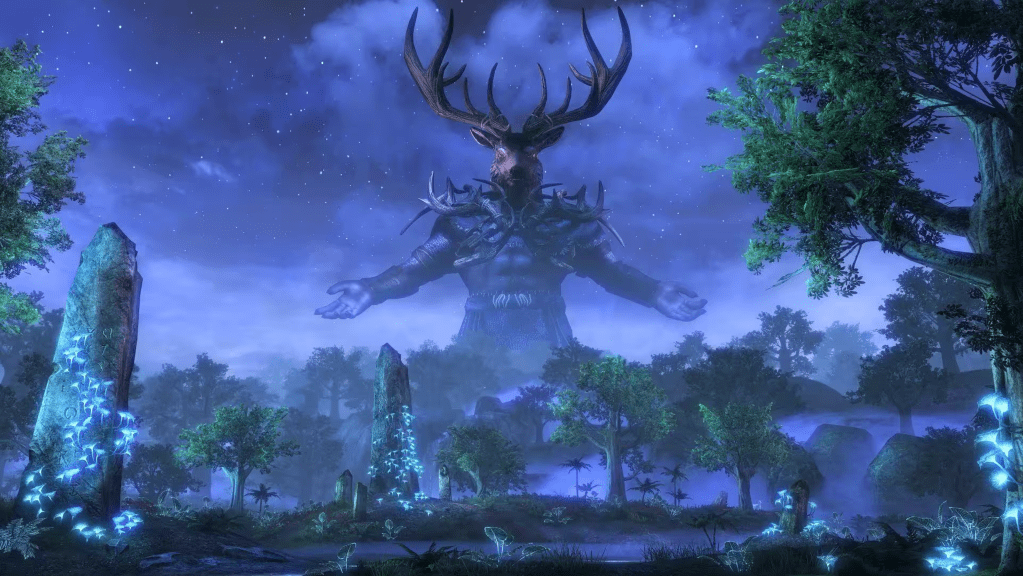
Dude. Seeing that massive, glowing figure hovering above, eyes blazing with the thrill of the hunt, is one of those “oh, sh*t” moments that really cements just how powerful he is. And let’s not forget the actual dungeon experience, fighting through savage werecreatures, avoiding deadly traps, and ultimately facing Balorgh, a lycanthrope so juiced up on Hircine’s power that he makes regular werewolves look like house pets. Everything about March of Sacrifices feels grand, primal, and wonderfully wild, capturing the very essence of Hircine’s domain. It’s one of those dungeons that, no matter how many times I’ve run it, still manages to impress me every single time.
The Howl in the Night
Hircine’s one of those Daedric Princes who’s impossible to pin down. He isn’t chaos for chaos’s sake or cruelty dressed up as divine purpose. He’s the wild itself—raw, relentless, and strangely fair in his own special way. Every living thing carries a trace of him, that buried instinct that flares when the hunt begins.
Across Tamriel’s history, his presence slips through like a shadow on the edge of a campfire. You don’t always see him, but you feel him there. He doesn’t bother with politics or power struggles the way his Daedric peers do. Ruling mortals isn’t the goal. For Hircine, it’s simpler than that. He keeps the balance, makes sure the chase never ends, and honours the law of predator and prey.
So, next time you hear a howl in the night or feel the urge to chase after something, remember: Hircine might be closer than you think, watching, waiting, and reveling in the eternal dance of the hunt.
Sources:
en.uesp.net
elderscrollsonline.com
elderscrolls.fandom.com
gamerant.com
 Jenesque Gaming
Leave a comment