
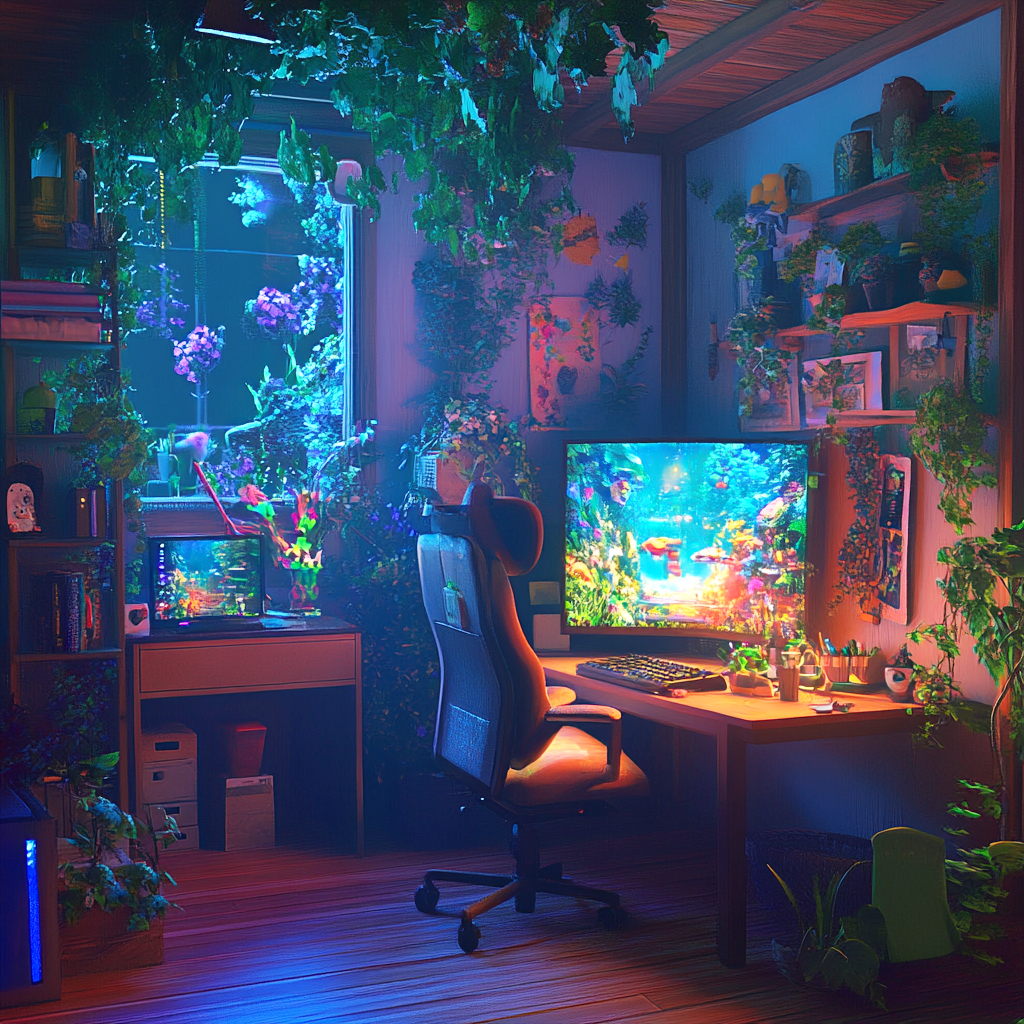
Picture this: a tiny house nestled in a lush green valley, a quaint little town where everyone knows your name, soft pastel colours, and a world where your biggest concern is whether you’ll have enough turnips to last the winter. Welcome to the world of cosy gaming, where there’s no combat (or at least, no stressful combat), no time limits, and absolutely no one is trying to kill you.
Over the last few years, the term ‘cosy gaming’ (or ‘cozy’ if you’re in the US) has exploded in popularity, but what does it actually mean? Is it just a clever way to sell us more games that have soft aesthetics and gentle soundtracks, or is there something deeper at play? Let’s break it down.
What Actually Is Cosy Gaming?
At its core, cosy gaming refers to games that prioritise relaxation, creativity, and a general sense of warmth and comfort. You’re not here to ‘win’ in the traditional sense; you’re here to unwind, take things at your own pace, and exist in a world that doesn’t expect much from you. The usual suspects include Animal Crossing: New Horizons, Stardew Valley, Spiritfarer, and Disney Dreamlight Valley—games that focus on gentle mechanics, wholesome interactions, and often some form of farming, crafting, or community-building. (Seriously, why is farming such a staple of this genre? Are we all secretly yearning to be turnip tycoons?)
Cosy gaming isn’t about the challenge. It’s entirely about the vibe. There’s no sweaty PvP, no leaderboard climbing, and no punishing difficulty spikes. Just you, your peaceful little world, and possibly a talking animal friend who gives you dubious life advice.
But Is It Just a Marketing Buzzword?
Ah yes, the cynic in me had to ask: is ‘cosy gaming’ a genuine genre, or is it just a convenient way to slap a label on an existing type of game and sell it to a very online audience? Because let’s be honest—before we were calling it ‘cosy gaming,’ we were just calling it life sims, farming sims, or casual games.
Gaming companies love a good buzzword. ‘Roguelike’, ‘soulslike’, ‘live-service’, ‘open-world survival-crafting RPG with lite rogue elements’—we’ve seen this before. By grouping games under a trendy label, publishers make them more marketable to a specific audience. And given that cosy gaming has become a TikTok and social media darling, it makes sense that companies would lean into it.
That said, while the term may be a convenient marketing tool, the sentiment behind it is very real. Players want a break from high-stakes, high-adrenaline gaming. In an era where stress levels are already through the roof, it’s no surprise that people gravitate towards games that offer a gentler, more controlled experience.
Why Are Cosy Games So Popular Now?
Clever branding has a lot to do with it, but it’s also about timing.
- The Pandemic Effect: During lockdowns, games like Animal Crossing: New Horizons became social lifelines, allowing people to connect, visit each other’s islands, and pretend the real world wasn’t on fire. It wasn’t just a game—it was a coping mechanism.
- Gaming Fatigue: Not everyone wants to spend their free time sweating through brutal boss fights or dealing with toxic multiplayer lobbies. Elden Ring might be a masterpiece, but sometimes you just want to plant some radishes without being murdered by a giant spectral knight.
- Customisation: Games with a strong element of personalisation (Stardew Valley, The Sims 4, Disney Dreamlight Valley) give players control over their environment, making them feel safe and creative rather than pressured to perform.
- Streaming & Social Media: TikTok and YouTube have helped cosy gaming flourish, with countless creators sharing their serene gaming setups, favourite in-game activities, and the sheer joy of fishing in every RPG that inexplicably has a fishing mechanic (seriously, why is this universal?).
What Makes a Game Actually Cosy?
Not every game with a cute art style is automatically ‘cosy’. Some games look the part but introduce mechanics that completely disrupt the experience. (Don’t Starve, I’m looking at you. You tricked me with your adorable visuals, then made me fight for my life against shadow monsters and starvation. Rude.)
A true cosy game generally includes:
- Low stakes and forgiving mechanics (minimal punishment for failure)
- A focus on creativity, exploration, or slow-paced progression
- A warm, inviting aesthetic (though not always pastels—see: A Short Hike)
- A sense of community (NPCs that actually like you for once)
- A lack of urgency or time pressure
That’s why some games get mistaken for cosy games when they’re actually quite stressful (Dwarf Fortress, Oxygen Not Included, and Slime Rancher can all get overwhelming fast if you’re not careful). Cosy gaming is less about the way a game looks and more about the way it feels to play.
So… Is Cosy Gaming a Scam?
Nope. It’s not just a buzzword, though it is a handy one for marketing purposes. Cosy gaming taps into a genuine need for escapism, relaxation, and creativity in a world that often feels overwhelming. If slapping a label on it helps more people discover games that bring them joy, then so be it.
However, as with any trend, expect companies to start forcing it. Not every game needs to be branded as ‘cosy’, and not every pastel-coloured life sim is automatically good. If the industry starts churning out half-baked ‘cosy’ experiences purely to cash in on the trend, we’ll start to see the cracks. (Looking at you, low-effort farming sims that promise depth but deliver nothing but chores.)
At the end of the day, the best games—cosy or otherwise—are the ones made with care, creativity, and genuine passion. Whether you’re running a farm, designing your dream home, or just vibing in a pixelated forest, what matters is how the game makes you feel.
So if you’re happily sipping tea, playing Stardew Valley for the 500th time, and designing the perfect in-game cottage… carry on. You’re living the dream.
 Jenesque Gaming
Leave a comment