
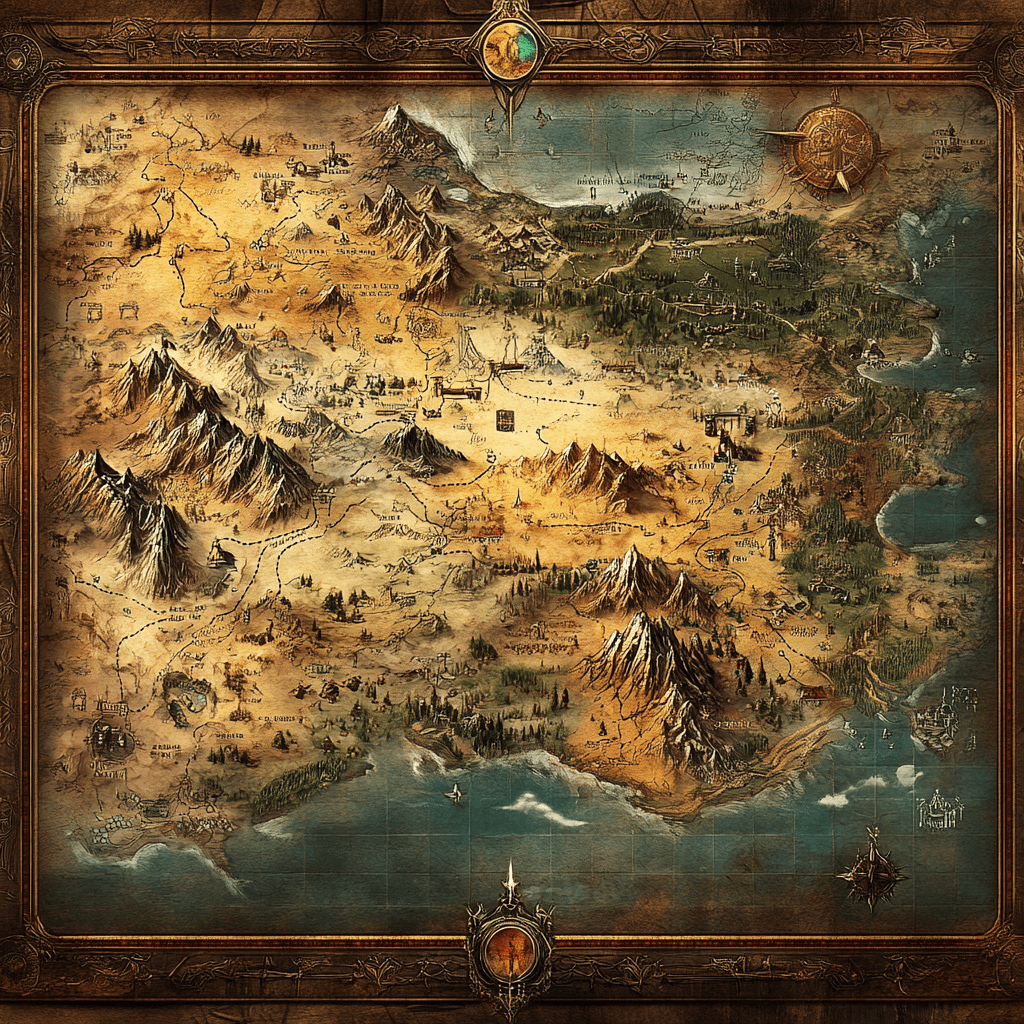
Once upon a time, the words ‘open world’ were enough to send a shiver of excitement down a gamer’s spine. A vast landscape, ripe for exploration, filled with secrets, side quests, and maybe even a random NPC whose entire existence is to sell you dubious potions out of a shack in the woods. But somewhere along the way, that excitement turned into exhaustion.
Because let’s be real, sometimes, open-world games are just too much. Instead of feeling like a thrilling adventure, they start to feel like a second job. And not the fun kind where you get paid and can slack off when the boss isn’t looking. No, the kind where your to-do list never ends, you’re running errands for people you don’t care about, and you start to wonder why you signed up for this in the first place.
So, what happened? Why have some of us gone from open-world enthusiasts to burnt-out completionists drowning in an endless sea of map markers? Let’s talk about it.
The Beauty of Open Worlds (When They’re Done Right)
Don’t get me wrong, open worlds can be fantastic. When executed well, they create a sense of freedom, immersion, and genuine wonder. Games like The Witcher 3, Red Dead Redemption 2, and Elden Ring offer worlds that feel alive. (See how restrained I was and didn’t mention Skyrim? Oh, oops, there I go mentioning Skyrim again…) They reward exploration with meaningful discoveries, rather than just ticking items off a checklist.
A good open world should feel like an actual world, not just a collection of content dumps. It should give you stories to uncover, landscapes that make you want to stop and take in the view, and side quests that feel like tiny adventures rather than busywork. When an open world gets it right, it’s one of the best experiences gaming has to offer.
Unfortunately, not all open-world games get it right.
The Checklist Problem: When Exploration Becomes a Chore
You boot up a new open-world game. The world map is revealed, and it’s… full. Absolutely stuffed with icons. Question marks, exclamation points, side quests, collectibles, bases to clear, towers to climb. Your screen is a confetti explosion of things to do.
At first, it’s exciting. So much to see! So much to do! And then, about ten hours in, reality sets in: this isn’t an adventure, it’s an obligation. You’re no longer exploring because you want to. You’re doing it because there’s a nagging sense that if you don’t, you’re missing out.
Ubisoft has become particularly notorious for this. Assassin’s Creed games, Far Cry, Ghost Recon—these titles love filling their maps with endless ‘activities’ that amount to minor variations of the same repetitive task. Clear this enemy camp. Collect ten of these things. Climb this tower so we can give you even more things to collect. It’s not engaging; it’s exhausting.
Exploration should feel organic, like a journey, not a laundry list. If I wanted that, I’d just stare at my actual real-life to-do list (which I am expertly ignoring at this very moment).
Size Isn’t Everything
At some point, game developers decided that ‘bigger’ meant ‘better’. They boasted about map sizes, as if ‘500 square miles of playable space’ somehow equated to ‘500 square miles of fun’. But here’s the thing: a big world is only as good as the things in it.
Remember Just Cause 4? Enormous map. Absolutely nothing interesting to do in it. It was a vast, open playground, except the only toys were the ones you made for yourself. Meanwhile, a smaller but more densely packed world, like Majora’s Mask’s Clock Town or Dragon Age: Origins’ Ferelden, can feel far more alive and engaging because they’re designed with intent.
A sprawling, lifeless map full of copy-pasted content isn’t impressive. It’s tedious. And if I have to ride my horse across yet another barren desert with nothing but the occasional cactus for company, I will start reconsidering my life choices.
FOMO and the Completionist’s Curse
Let’s talk about the real enemy of open-world games: the completionist brain. The little voice in your head that whispers, ‘You can’t just leave that side quest unfinished. What if it leads to something amazing?’
Spoiler: It probably won’t. More often than not, it’s just another fetch quest. But the fear of missing out keeps us running around in circles, hoovering up every last point of interest until we’re so burnt out we forget why we even started playing in the first place.
Breath of the Wild handled this brilliantly. Yes, there are Korok seeds everywhere, but you don’t actually need them all (unless you enjoy suffering). The game encourages exploration for the sake of it, not because a glowing marker is guilting you into it. Compare that to a game like Horizon Forbidden West, which bombards you with icons, and you can see why some players end up paralysed by choice.
The Best Open Worlds Let You Set Your Own Pace
Here’s the real secret to an engaging open world: it shouldn’t feel like a job. The best ones let you dictate your own pace. They encourage genuine curiosity, rather than overwhelming you with content.
Games like Skyrim (yes, I had to mention Skyrim) give you the space to carve your own path. Want to be the hero? Sure. Want to ignore the main quest and just steal every wheel of cheese in Whiterun? Absolutely. The world reacts to you, rather than shoving an arbitrary list of objectives in your face.
Likewise, Elden Ring did something incredible by stripping away the usual open-world clutter. No minimap markers, no endless quest logs—just a vast, mysterious world that rewards actual exploration. You go somewhere because it looks interesting, not because a UI element told you to.
Do We Even Like Open Worlds Anymore?
We still love them, but we’re tired. We don’t need maps the size of small countries, filled with repetitive fluff. We need meaningful open worlds, ones that respect our time and curiosity, rather than treating us like checklist-chasing drones.
So to the developers out there: quality over quantity, please. Give us worlds that make us want to explore, not ones that make us sigh the second we open the map. And for the love of all things holy, let’s retire the ‘climb the tall thing to reveal icons’ mechanic. We’ve suffered enough.
Now, if you’ll excuse me, I have a hundred unfinished side quests to ignore in The Witcher 3.
 Jenesque Gaming
Leave a comment