
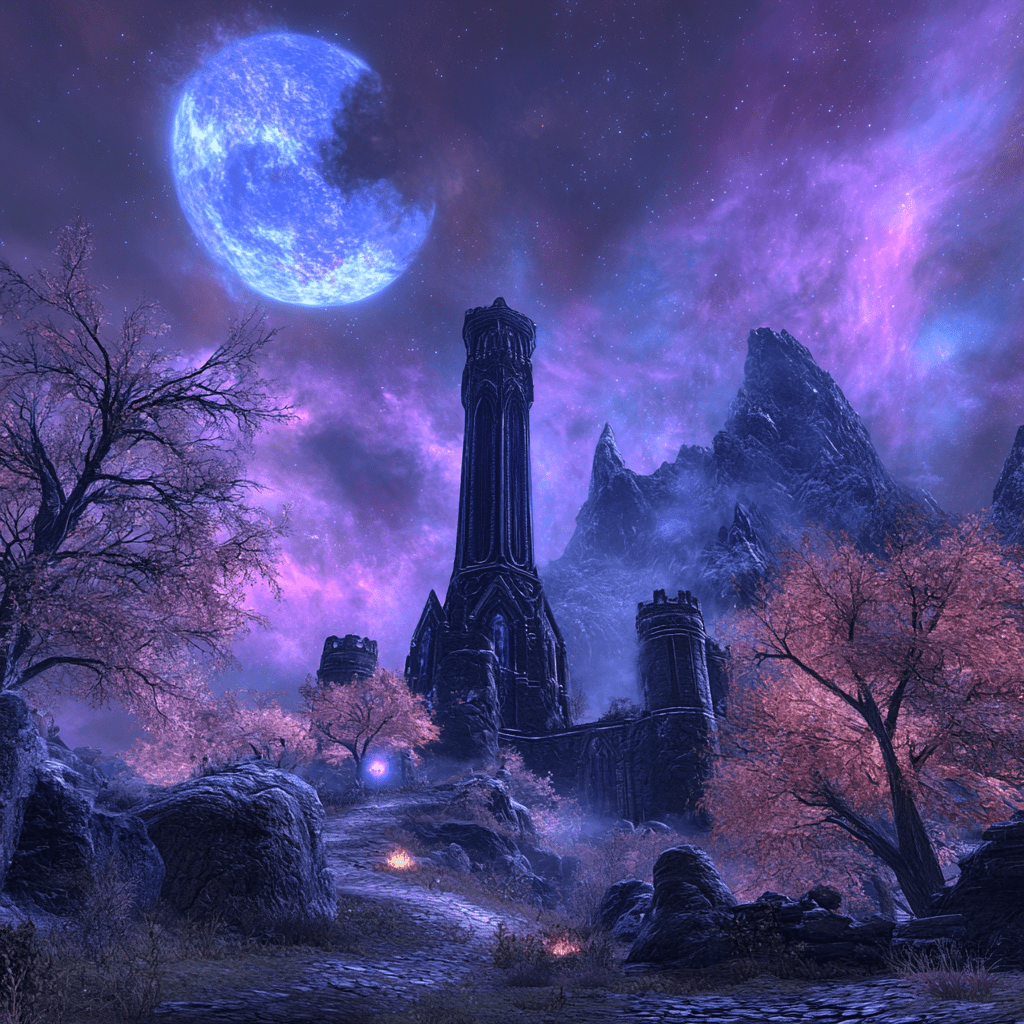
When it comes to The Elder Scrolls universe, there’s one debate that never truly dies: Are the Aedra really the ‘good guys,’ and are the Daedra inherently evil? It’s easy to fall into that mindset. After all, the Daedric Princes have a nasty habit of warping reality, demanding blood sacrifices, and generally making life miserable for mortals. Meanwhile, the Aedra… well, they mostly just sit there, being worshipped, and occasionally sending down a divine champion to do their dirty work.
But is that really all there is to it? Are the Aedra actually any better than their Daedric counterparts, or is this just another case of different shades of moral ambiguity? Let’s break down the morality of both divine groups and see if we can finally figure out who the real villains of Tamriel are.
The Aedra: Benevolent Gods or Just Useless?
The Aedra are often seen as the ‘good’ deities of The Elder Scrolls universe, but let’s take a closer look at what they actually do. These are the gods who created Nirn, except, they did it at the cost of their own power. So now, they mostly just… exist, with little ability to interact with the world. They’re the equivalent of absentee landlords who built a house, promptly forgot about it, and now only respond to maintenance requests when the roof is literally on fire.
Take Akatosh, for instance: the supposed god of time and order. Yes, he empowered Martin Septim to stop Mehrunes Dagon in Oblivion, but let’s not forget that the entire Oblivion Crisis happened because of a catastrophic failure of his own covenant with the Empire. The moment the Dragonfires went out, Tamriel was plunged into chaos, and it was up to a bunch of mortals to fix his mess.
Then there’s Stendarr, god of mercy. He preaches compassion, yet his followers, the Vigilants of Stendarr, go around acting like overzealous inquisitors, purging anything remotely Daedric with extreme prejudice. That’s less ‘mercy’ and more ‘burn the heretics.’
And don’t get me started on Zenithar. The god of commerce? In Tamriel? Have you seen the in-game economy? One day a cabbage is worth two septims, the next day a merchant is offering me five gold for an enchanted warhammer. If he’s in charge of trade, he’s doing a terrible job.
The Daedra: Evil Monsters or Just a Little Extra?
Unlike the Aedra, the Daedra didn’t sacrifice their power to create the world, which means they still have plenty of energy to mess with mortals. And mess they do. Some, like Molag Bal and Mehrunes Dagon, are unambiguously awful. One’s the god of domination and vampirism, the other is basically Tamriel’s version of Satan, only with more destruction and fewer pitchforks.
But then we have Daedra who are far more morally complex. Azura, for instance, is known for her prophecies and guidance. Yes, she gets vengeful when mortals cross her, but she’s also one of the few Daedric Princes who genuinely seems to care about her followers. Compare that to the Aedra, who are so passive they might as well be statues.
And let’s talk about Sheogorath. Yes, he’s the Daedric Prince of Madness, but his realm, the Shivering Isles, is one of the most fascinating and creative places in The Elder Scrolls universe. If nothing else, he’s at least entertaining. You can’t say the same about most of the Aedra, whose idea of excitement is not answering prayers for a thousand years.
Boethiah and Mephala are no saints, but they at least respect ambition and secrecy, respectively. And let’s face it, Nocturnal is probably the coolest of the bunch, what with her whole ‘mysterious patron of thieves’ aesthetic. If I had to pick between praying to a god who ignores me or one who might give me some sweet stealth abilities, I know where my loyalty lies.
The Big Picture: Who’s Worse?
The Aedra may have created Nirn, but they largely abandoned it. The Daedra, on the other hand, constantly interfere, often in horrifying ways, but at least they interact. And let’s be real, Tamriel’s most devoted Daedra worshippers like the Dunmer culture, the Dark Brotherhood, or the Thieves Guild often have a much deeper understanding of their patrons than the average citizen worshipping the Aedra out of sheer obligation.
In the grand scheme of things, the Aedra are neutral at best and incompetent at worst. They let their mortal followers struggle, war, and die without much intervention. The Daedra, meanwhile, might be malevolent, but they’re at least active.
So, who’s the real villain? Well, maybe the answer isn’t so black and white. The Aedra are negligent gods who have long since abandoned their creations, while the Daedra, for all their cruelty, at least engage with mortals. Maybe the real answer is that both divine groups are just different kinds of terrible.
Or, you know, maybe we should all just worship the Hist. At least the trees seem to know what they’re doing.
What do you think? Are the Aedra actually good? Are the Daedra as evil as they seem? Let’s debate (before Molag Bal hears us and decides to get involved).
 Jenesque Gaming
Leave a comment