
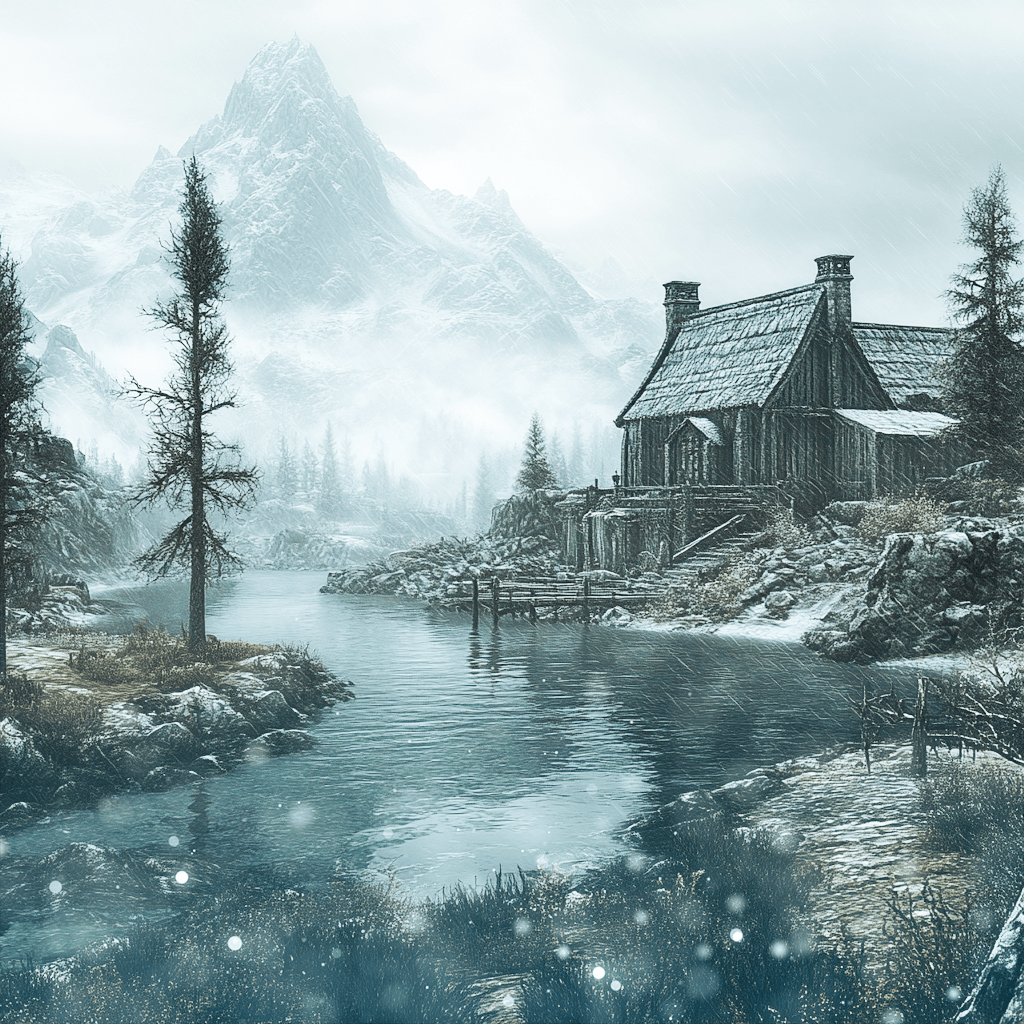
Skyrim’s factions. The Companions, the College of Winterhold, the Thieves Guild, the Dark Brotherhood… these are supposed to be some of the most iconic organisations in Tamriel. They’re the kind of groups you imagine spending dozens of hours with, climbing through the ranks, earning respect, making difficult decisions, and eventually shaping their future.
Instead, you become the leader after what feels like a long weekend.
You’d think that reaching the top would come with gravitas, stress, responsibility, and perhaps the occasional life-altering decision. Instead, it’s more like being handed a fancy title, given a broom cupboard to sleep in, and politely ignored while everyone carries on exactly as they did before you arrived. Congratulations, Harbinger. Now could you fetch my sword?
So what went wrong? Why do Skyrim’s factions feel strangely shallow compared to those in Morrowind and Oblivion? More importantly, what lessons should Bethesda take into The Elder Scrolls VI? Let’s dig into why these guilds never quite lived up to their incredible potential.
The Problem with Skyrim’s Factions: A Lack of Meaningful Choice
Skyrim has a bit of a commitment issue. The game wants you to join every faction without consequence, no matter how wildly contradictory they are. Archmage of the College of Winterhold and a werewolf berserker leading the Companions? Perfectly reasonable. A Nightingale sworn to Nocturnal while simultaneously serving as the Listener of Sithis? Apparently, everyone’s happy with that. The only real requirement is turning up, speaking to a couple of NPCs, completing a handful of quests, and being vaguely competent at whatever the guild happens to do.
It’s less “choosing your path” and more “collecting job titles like they’re achievements.”
Now compare that to Morrowind. The moment you joined a faction, your decisions started carrying weight. The Great Houses weren’t interested in sharing your loyalty with their rivals. The Fighters Guild and the Thieves Guild actively clashed with one another. Advancing in one organisation could close doors elsewhere, forcing you to think about who your character actually was and where their loyalties lay. Those restrictions weren’t there to punish the player. They made your choices matter.
Skyrim, by contrast, lets you bounce between faction allegiances like a university student sampling every elective before settling on nothing in particular. By the end of a single playthrough, you’re simultaneously the greatest mage in Skyrim, head of its most notorious assassins, leader of its oldest warrior order, and the person every shopkeeper still asks to deliver a letter down the road.
It’s undeniably fun, but it comes at the expense of roleplaying. When every door is open all the time, your decisions stop defining your character, and the factions begin to feel less like competing organisations and more like questlines waiting politely for their turn.
The Companions: Werewolves in Name Only
The Companions are Skyrim’s spiritual successor to the Fighters Guild, albeit with a distinctly Nordic flavour. They’re also apparently werewolves because… well… it sounds cool.
Compared to Oblivion’s Fighters Guild, the difference is night and day. In Oblivion, you worked your way through the ranks, dealt with corruption inside the guild, investigated the increasingly suspicious Blackwood Company, and genuinely earned your place at the top. Becoming Guildmaster felt like the culmination of a long journey.
In Skyrim? Kodlak dies, everyone looks around the room for a moment, makes brief eye contact with the newest recruit, and collectively decides, “I suppose it’s your problem now.”
Congratulations. You’re Harbinger.
Except… you aren’t really.
You don’t assign work. You don’t settle disputes. Nobody comes to you for guidance. The Companions continue operating exactly as they did before, while you wander off to clear another cave full of draugr. It’s a promotion in title only, and once the credits roll on the questline, you’d barely know you were supposed to be leading one of Skyrim’s oldest warrior orders.
Then there’s the werewolf storyline. Oh, man.
On paper, it’s brilliant. Joining an ancient inner circle, embracing a dangerous curse, wrestling with what that means for your character… there’s so much narrative potential there. Imagine guards growing suspicious after rumours spread. Imagine silver weapons becoming something you genuinely feared. Imagine NPCs refusing to trust you if your secret slipped out.
Instead, lycanthropy mostly amounts to pressing a button every now and then because punching bandits across the map is undeniably entertaining.
It’s fun. It just isn’t transformative. Which is a shame, because werewolves are objectively cool, and Skyrim somehow found a way to make becoming one feel strangely ordinary.
The College of Winterhold: The Least Magical Magic Guild
You’d think The Elder Scrolls’ first proper magic academy would be a place of wonder. Ancient libraries filled with forbidden tomes. Arcane experiments that occasionally explode. Rival students trying to outdo one another. Gruelling magical examinations. Professors who expect you to do more than turn up once every few weeks.
Instead, the College of Winterhold somehow manages to make attending wizard school feel… strangely mundane. It’s like expecting Hogwarts and ending up at a perfectly ordinary British secondary school.
For a start, the place feels tiny. Compared to Oblivion’s Mages Guild, where every major city had its own guild hall, resident experts, and local flavour, Skyrim’s magical community appears to consist of one isolated college and about eight people who all know each other.
Then there’s your promotion to Archmage.
Much like the Companions, it’s a wonderful title with remarkably little attached to it. Nobody seeks your guidance. You don’t oversee research. You aren’t uncovering lost schools of magic or mentoring the next generation of mages. Beyond the occasional “Ah, Archmage,” everyone simply gets on with their day while you disappear into another Dwemer ruin.
Honestly, I’d have loved a few small leadership mechanics. Let me teach a class, or send apprentices on research projects. Let me decide which magical disciplines the College should pursue. Maybe two students blame each other for doing something naughty and you have to investigate and then choose which one gets suspended. Just give me something that makes becoming Archmage feel like more than unlocking a rather nice penthouse with an excellent view.
And then we arrive at the funniest part of the whole questline: the fact that you barely need to use magic to reach the top. With enough determination, a sturdy sword, and perhaps the occasional Shout, you can complete almost the entire College storyline while demonstrating all the magical aptitude of a mildly aggressive cabbage. And yet somehow, this qualifies you to lead Tamriel’s foremost institution of magical learning.
The irony is that the College has all the ingredients for a fantastic faction. A mysterious artefact. Political tension with Winterhold. Ancient magical secrets. A cast of likeable teachers.
It just never quite graduates.
The Thieves Guild: A Mafia Story That Forgot About the Thieves
The Thieves Guild actually has one of Skyrim’s strongest openings. A once-powerful criminal organisation has fallen on hard times. The city’s corrupt, the Guild’s influence is fading, everyone’s suspicious of one another, and it’s your job to help rebuild the empire from the shadows. Brilliant. That’s exactly the kind of story a Thieves Guild should tell.
And then… somewhere along the way, somebody remembered Daedric Princes exist, and suddenly you’re less concerned with burglary, extortion, and organised crime, and far more concerned with supernatural destiny and serving Nocturnal. None of those ideas are inherently bad. In fact, they’re pretty interesting. They just end up overshadowing what made the Guild compelling in the first place.
I wanted to become the greatest thief in Skyrim.
Instead, I accidentally joined a religious organisation.
The biggest missed opportunity comes once you become Guild Master. As with every other faction, the title sounds impressive until you realise Brynjolf is still effectively running the place. He’s assigning jobs, directing operations, living at the base, and making the important decisions while you stand nearby wearing slightly nicer armour. Imagine how much more engaging it could have been if the Guild genuinely became yours to shape. Would you rebuild it into a ruthless criminal empire that controls every major city? Focus on high-profile heists rather than petty theft? Enforce a strict code that targets corrupt nobles while protecting ordinary people? Maybe you’d abolish Nocturnal’s influence altogether and return the Guild to its roots.
Instead, every player inherits exactly the same Guild.
The irony is that Skyrim already gives you a glimpse of what this could have looked like. Restoring influence across the holds through the radiant jobs genuinely makes the Guild feel as though it’s rebuilding. It’s one of the few times your actions visibly change the faction. I just wish that same philosophy had carried through to becoming Guild Master, because beneath the Daedric prophecies and magical skeleton keys is the outline of what could have been one of Bethesda’s greatest crime stories.
The Dark Brotherhood: The One Exception (Almost)
To be fair to Bethesda, the Dark Brotherhood is easily one of Skyrim’s strongest faction questlines. The atmosphere is wonderfully unsettling, the characters are memorable, the twists genuinely land, and the gradual collapse of the Sanctuary gives the story real emotional weight. For once, it actually feels like your actions have lasting consequences.
Right up until you’re promoted.
Because, naturally, Skyrim has to Skyrim.
Astrid is gone. The Brotherhood has been reduced to a handful of survivors. You’re named the Listener, supposedly the most important figure in the entire organisation… and then very little changes. Nazir still manages the day-to-day operations; contracts continue much as they always have. Your role largely boils down to speaking with the Night Mother every so often before heading back out to stab another unfortunate noble. Once again, you’re the leader in name rather than in function.
Imagine rebuilding the Brotherhood from the ground up. Recruiting new assassins. Choosing whether to restore the old traditions or abandon them entirely. Deciding if the Brotherhood should remain a cult devoted to Sithis or evolve into something more pragmatic — a network of professional killers for hire, stripped of its religious dogma. Those choices would have made becoming the Listener feel like the beginning of a new chapter instead of the end of the questline.
Instead, like so many of Skyrim’s factions, the story reaches its most interesting point… and then stops. You get a fantastic title, a shiny new Sanctuary, and the distinct impression that everyone else will continue running the organisation while you’re off collecting dragon souls.
What Skyrim’s Factions Should Have Done
Bethesda got the foundations right. Every faction begins with a compelling premise and memorable characters, and the promise that you’re about to become part of something bigger than yourself. The trouble is that they all seem to lose confidence right at the finish line.
So what would make The Elder Scrolls VI‘s factions truly legendary?
Make Leadership Actually Matter
If you’re going to hand me the keys to the organisation, let me run the organisation. Give me difficult decisions! Let me assign work, settle disputes, recruit new members, or decide where the faction is headed. If I’m Guild Master, I want the Guild to reflect my leadership. If I’m the Listener, let me rebuild the Brotherhood. If I’m Archmage, let me decide what magical research the College pursues.
And while we’re at it… can we redecorate a little? Some of these headquarters have clearly gone years without someone buying a broom. Nightingale Hall looks less like the secret base of legendary master thieves and more like an abandoned basement that occasionally develops sentience.
Let Choices Close Doors
One of the greatest strengths of roleplaying games is committing to a character. Maybe your Dragonborn despises magic and would never set foot inside the College. Maybe they’re an honourable warrior who refuses to work with assassins. Maybe joining one faction earns the distrust of another. That’s interesting.
Not every player needs to experience every questline in a single playthrough. In fact, forcing difficult choices gives you a reason to start a second character in the first place.
Build a More Reactive World
Actions should have consequences beyond a few lines of dialogue. If I become a werewolf, let rumours spread. If I’m the Listener, perhaps certain nobles refuse to meet with me. If I restore the Thieves Guild, merchants in Riften might feel safer… or considerably more nervous, depending on how I’ve chosen to run it.
Those little reactions make the world feel alive. More importantly, they make your achievements feel earned.
Slow the Promotions Down
Perhaps the biggest lesson Bethesda could take into The Elder Scrolls VI is this:
Stop making me the boss after one weekend. Let me spend time as an apprentice. Let me climb the ranks. Give me opportunities to fail, to prove myself, and to build relationships with the people I’m eventually supposed to lead.
Because when becoming Guild Master feels inevitable, becoming Guild Master stops feeling special.
Final Thoughts: A Wasted Opportunity
Skyrim’s factions should have been legendary. The foundations are all there: compelling organisations, memorable characters, brilliant settings, and storylines that begin with genuine promise. That’s almost what makes the missed opportunities so frustrating. You can constantly glimpse the game they could have been.
Instead, too many of them end the same way. You’re handed an impressive title, everyone congratulates you for about thirty seconds, and then the world quietly carries on as though nothing happened.
Hopefully, Bethesda has taken those lessons on board. Because if The Elder Scrolls VI lets us truly shape the organisations we join—earning our place, making difficult decisions, and seeing those choices ripple through the world—it could deliver the best faction system the series has ever had.
If, however, I’m promoted to leader after one particularly productive afternoon, I may have to Fus Ro Dah my monitor.
What do you think? Did Skyrim’s factions leave you wanting more, or do you think Bethesda got the balance just right? I’d love to hear your thoughts in the comments.
(And yes, I’m still irrationally annoyed that I can become Archmage with the magical ability of an enthusiastic potato.)
 Jenesque Gaming
Leave a comment